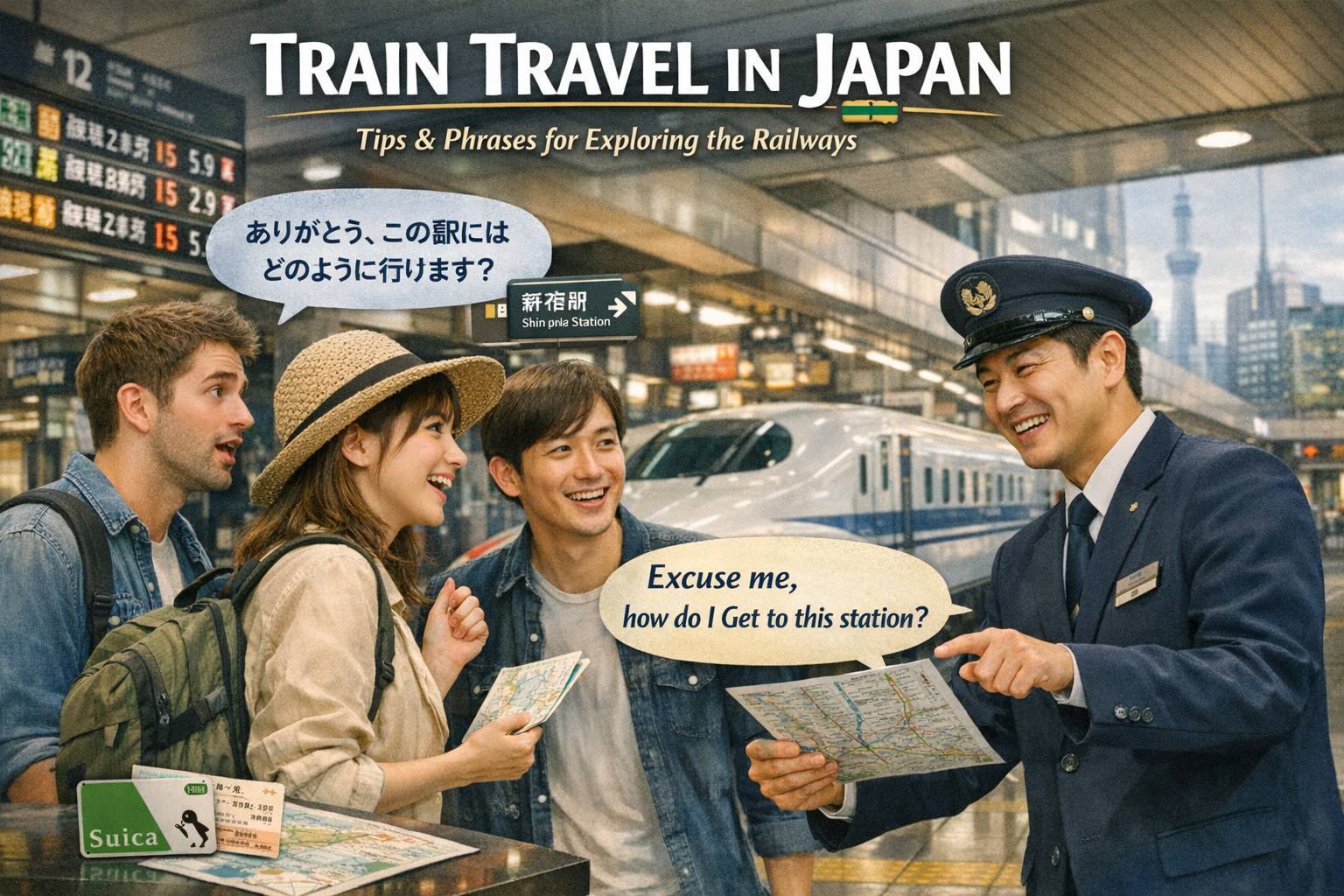
Traveling by train in Japan can be smooth and enjoyable if you know a few essential phrases. From ticketing to finding the right platform and asking for help, these phrases will make your trip easier and less stressful.
As a Japanese person living in Japan, especially in Tokyo, I see many foreign travelers every day. Since many Japanese don’t speak English fluently, it’s important to memorize a few useful Japanese phrases before your trip.
Here are the must-know phrases for train travel in Japan:

1. Excuse me – Sumimasen (すみません)
Sumimasen is one of the most versatile phrases in Japan. You can use it to get someone’s attention, apologize, or politely ask for help.
Usage example:
- Sumimasen, eki wa doko desu ka? (すみません、駅はどこですか?) – Excuse me, where is the station?
- Sumimasen, kono densha wa Shibuya ni ikimasu ka? (すみません、この電車は渋谷に行きますか?) – Excuse me, does this train go to Shibuya?
Japanese perspective: When asking for directions in crowded stations, saying sumimasen politely is key. It shows respect and usually makes people willing to help.
Here is the article related to “sumimasen”

2. Where is the ticket machine? – Kippu-ki wa doko desu ka? (切符機はどこですか?)
Ticket machines are usually straightforward, but asking politely is faster if you are unsure.
Usage example:
- Sumimasen, kippu-ki wa doko desu ka? (すみません、切符機はどこですか?) – Excuse me, where is the ticket machine?
Tip: Many machines have English options, but asking still helps avoid mistakes.
3. One ticket to [station] – [Station] made no kippu o kudasai ([駅]までの切符をください)
When buying tickets at the counter or vending machine, this phrase is essential.
Usage example:
- Shinjuku made no kippu o kudasai. (新宿までの切符をください) – One ticket to Shinjuku, please.
Japanese perspective: Speak clearly and politely. Adding onegaishimasu (お願いします) makes a positive impression.
4. Which platform? – Nan-ban home desu ka? (何番ホームですか?)
To catch the right train, you may need to ask:
Usage example:
- Sumimasen, Chuo-sen wa nan-ban home desu ka? (すみません、中央線は何番ホームですか?) – Excuse me, which platform is the Chuo Line?
Tip: Stations in Tokyo can be large and confusing. Asking politely is faster than wandering around.
5. I don’t understand – Wakarimasen (わかりません)
If the staff or locals speak too quickly, this simple phrase will help.
Usage example:
- Sumimasen, wakarimasen. (すみません、わかりません) – Sorry, I don’t understand.
Japanese perspective: Pair it with sumimasen to stay polite. People usually repeat slowly or guide you carefully.
6. Can you speak English? – Eigo o hanasemasu ka? (英語を話せますか?)
Sometimes you may need help in English. Ask politely:
Usage example:
- Sumimasen, Eigo o hanasemasu ka? (すみません、英語を話せますか?) – Excuse me, can you speak English?
7. [station] – [Station] e wa dou ikeba ii desu ka? ([駅]へはどう行けばいいですか?)
This phrase is useful if you need detailed guidance:
Usage example:
- Sumimasen, Tokyo eki e wa dou ikeba ii desu ka? (すみません、東京駅へはどう行けばいいですか?) – Excuse me, how can I get to Tokyo Station?
Tip: Japanese people often give detailed instructions, sometimes even drawing maps for you.
8. Thank you – Arigatou gozaimasu (ありがとうございます)
Never underestimate a simple thank you. Japanese staff and locals appreciate politeness.
Usage example:
- Arigatou gozaimasu! (ありがとうございます!) – Thank you!
Japanese perspective: Even a small smile and sincere arigatou gozaimasu creates a positive impression.
Conclusion
Traveling by train in Japan doesn’t have to be stressful. Memorizing these essential phrases — sumimasen, kippu, onegaishimasu, wakarimasen, and arigatou gozaimasu — will help you navigate stations, buy tickets, and ask for help smoothly.

コメント