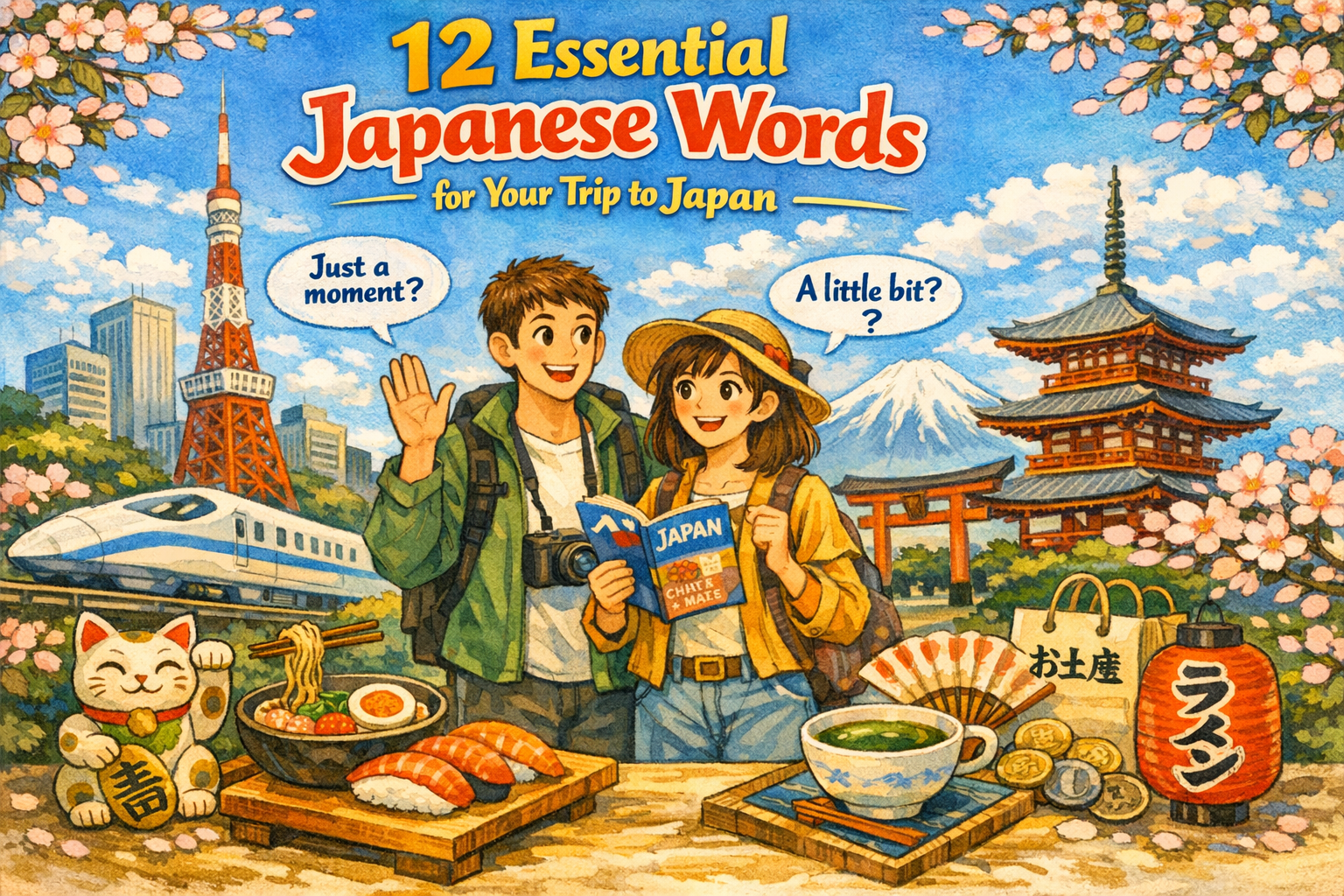
Traveling to Japan can be amazing, but even a short trip can become stressful if you don’t know the basics of Japanese communication. As a Japanese person, I’ll explain not only the words but also the situations where we actually use them in daily life.
Here are the essential phrases you should know before your trip:
- Konnichiwa (こんにちは) – Hello / Good afternoon
- Ohayou gozaimasu (おはようございます) – Good morning
- Konbanwa (こんばんは) – Good evening
- Arigatou / Arigatou gozaimasu (ありがとう / ありがとうございます) – Thank you
- Sumimasen (すみません) – Excuse me / Sorry
- Onegaishimasu (お願いします) – Please / I request
- Toire wa doko desu ka? (トイレはどこですか?) – Where is the restroom?
- Ikura desu ka? (いくらですか?) – How much is it?
- Daijoubu desu ka? (大丈夫ですか?) – Are you okay? / Is it okay?
- Mou ichido onegaishimasu (もう一度お願いします) – Could you say that again?
- Wakarimasen (わかりません) – I don’t understand
- Eigo o hanasemasu ka? (英語を話せますか?) – Can you speak English?
These phrases cover greetings, shopping, asking for help, and basic communication. They are the ones you will most frequently use in Japan.
1. Hello / Good afternoon – Konnichiwa (こんにちは)
In Japan, greetings are everywhere. Saying konnichiwa when entering shops, restaurants, or meeting someone is expected.
Japanese perspective: On my first visit to a small ramen shop, I walked in silently. The staff served me politely, but the atmosphere felt distant. When I greeted them with “Konnichiwa!”, the mood changed instantly, and they smiled warmly.
Even just lightly nodding your head with a smile is enough. This is called eshaku (会釈).
Other variations:
- Ohayou gozaimasu (おはようございます) – Good morning (before 10 a.m.)
- Konbanwa (こんばんは) – Good evening (after sunset)
2. Thank you – Arigatou / Arigatou gozaimasu (ありがとう / ありがとうございます)
Expressing gratitude is essential in Japan. Even small gestures deserve a thank you.
Japanese perspective: When buying souvenirs, a simple “Arigatou gozaimasu” makes staff feel appreciated and often leads to friendlier service. It’s part of our culture of politeness.
It’s better to say ‘thank you’ even a little too much, as it leaves a good impression!
Example:
- Tetsudatte kurete arigatou. (手伝ってくれてありがとう) – Thank you for helping me.

3. Excuse me / Sorry – Sumimasen (すみません)
Sumimasen is versatile. Use it for apologies, getting attention, or asking questions.
Japanese perspective: In crowded trains, we say sumimasen if we bump into someone. It’s polite and avoids conflict.
Many Japanese people say ‘sumimasen’ too often, but you don’t need to imitate that!
Example:
- Sumimasen, kore wa ikura desu ka? (すみません、これはいくらですか?) – Excuse me, how much is this?
4. Please – Onegaishimasu (お願いします)
Used to politely request something. Often combined with sumimasen.
Japanese perspective: In restaurants or shops, adding onegaishimasu signals respect and gratitude.
When saying ‘onegaishimasu,’ look at the person and speak clearly — it makes a good impression!
Example:
- Ramen o onegaishimasu. (ラーメンをお願いします) – Ramen, please.
5. Where is the restroom? – Toire wa doko desu ka? (トイレはどこですか?)
This phrase is essential in stations, restaurants, and tourist spots.
Japanese perspective: Asking politely often results in helpful directions and sometimes extra advice.
6. How much is it? – Ikura desu ka? (いくらですか?)
Used when shopping in stores or markets. Politeness matters, so start with sumimasen.
Example:
- Sumimasen, kore wa ikura desu ka? (すみません、これはいくらですか?) – Excuse me, how much is this?
7. Are you okay? / Is it okay? – Daijoubu desu ka? (大丈夫ですか?)
Commonly used when someone trips, drops something, or to confirm arrangements.
Japanese perspective: Japanese people often check on each other quietly, so asking daijoubu desu ka shows empathy and cultural awareness.
8. Could you say that again? – Mou ichido onegaishimasu (もう一度お願いします)
Used in restaurants, shops, or when speaking with locals to clarify something.
9. I don’t understand – Wakarimasen (わかりません)
Essential when you can’t understand directions, menus, or explanations. Always polite to pair with sumimasen.
10. Can you speak English? – Eigo o hanasemasu ka? (英語を話せますか?)
If all else fails, asking this politely can save time and help locals understand your needs.
Bonus: Real Traveler Experiences
As a Japanese person, I notice many travelers trying these phrases and making small mistakes:
- Forgetting gozaimasu after arigatou – sounds abrupt.
- Saying toire too loudly – locals will smile politely.
- Skipping sumimasen – can feel slightly rude.
Even small efforts are highly appreciated.
Conclusion
Learning these 12 essential phrases will greatly improve your travel experience in Japan. From greetings to shopping and asking for help, these words are the ones you’ll use the most. Locals notice politeness and effort, and it can turn ordinary interactions into memorable experiences.
💡 Pro Tip: Keep a small pocket card with Japanese phrases + English reading + usage scenario for quick reference. It makes traveling easier and more enjoyable.
If you would like to learn more about Japanese↓



コメント