- Introduction: What Does “Reading the Air” Mean?
- 1. A Real-Life Example: When “Not Reading the Air” Isn’t Always Bad
- 2. Bad Examples of “Not Reading the Air”
- 3. The Core Meaning: Respecting Others
- 4. Why Is “Reading the Air” Important in Japan?
- 5. Connection to Indirect Communication
- 6. The Risk of “Reading the Air”
- 7. Balance: When You Should and Shouldn’t “Read the Air”
- 8. Cultural Comparison
- Conclusion
Introduction: What Does “Reading the Air” Mean?
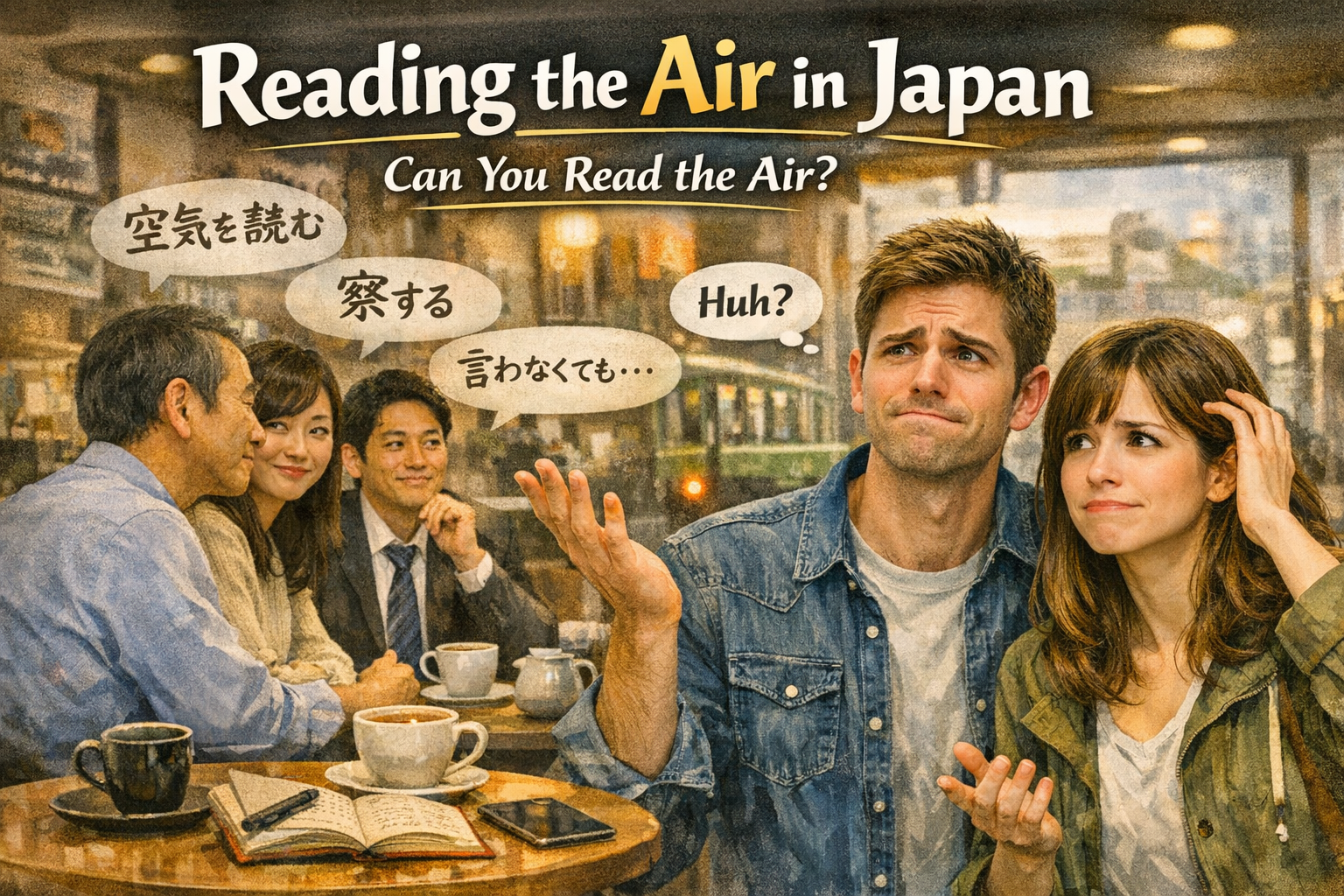
“Reading the air” (空気を読む / kuuki wo yomu) means sensing the atmosphere of a situation and acting appropriately based on it.
But what does “appropriate” really mean?
From a Japanese perspective, it often means:
- aligning with the opinions of others
- behaving in a way that people around you expect
This is not always a good thing, but this is what “reading the air” actually looks like in real life.
1. A Real-Life Example: When “Not Reading the Air” Isn’t Always Bad
Let’s imagine this situation:
A class is discussing what to do for a school festival.
Everyone is leaning toward selling takoyaki.
At that moment, you come up with an idea:
👉 “Ice cream might sell better.”
Even if you have a good reason, saying this at that moment might make some people think:
👉 “You can’t read the air.”
However, personally, I think this is actually a good example of not reading the air.
👉 It shows:
- independent thinking
- willingness to challenge the group
2. Bad Examples of “Not Reading the Air”
Now let’s look at examples that are generally considered bad:
- Repeatedly making negative comments while enjoying a trip with friends
- Showing no motivation in a workplace project everyone is working hard on
- Speaking loudly at a funeral
👉 These behaviors are not just problematic in Japan, right?
3. The Core Meaning: Respecting Others
This is the key point.
👉 “Reading the air” is essentially:
👉 respecting the people around you
It means:
- understanding the situation
- adjusting your behavior
- considering others’ feelings
4. Why Is “Reading the Air” Important in Japan?
Japanese society values:
- harmony
- group balance
- avoiding conflict
👉 Because of this, people often:
- avoid strong opinions
- adapt to the group
- prioritize atmosphere over logic
👉 Learn more about this mindset:

5. Connection to Indirect Communication
“Reading the air” is closely related to how Japanese people communicate.
Instead of saying things directly, people often use:
- soft expressions
- vague language
Examples:
- ちょっと難しいです
→ It’s chotto difficult (→ “no”) - 多分大丈夫
→ It’s tabun okay
👉 These expressions require the listener to “read the air.”
👉 Learn more:


6. The Risk of “Reading the Air”
While it has benefits, it also has downsides:
- People may hide their true opinions
- Creativity can be limited
- Decisions may follow the group rather than logic
👉 This is why some people see it as a negative trait.
7. Balance: When You Should and Shouldn’t “Read the Air”
✔ Good situations
- respecting serious environments (e.g., funerals)
- maintaining group harmony
- being considerate of others
✔ When it may not be good
- when new ideas are needed
- when honesty is important
- when the group is clearly wrong
👉 Like the ice cream example earlier.
8. Cultural Comparison
In many Western cultures:
- expressing your opinion = positive
In Japan:
- adapting to the situation = valued
👉 Neither is “correct”
👉 They are just different ways of communication.
Conclusion
“Reading the air” is not just about being quiet or passive.
It is about:
- understanding the situation
- respecting others
- balancing your behavior
👉 Sometimes it is good, and sometimes it is not.
The key is knowing when to follow the air—and when to challenge it.



コメント