Conclusion
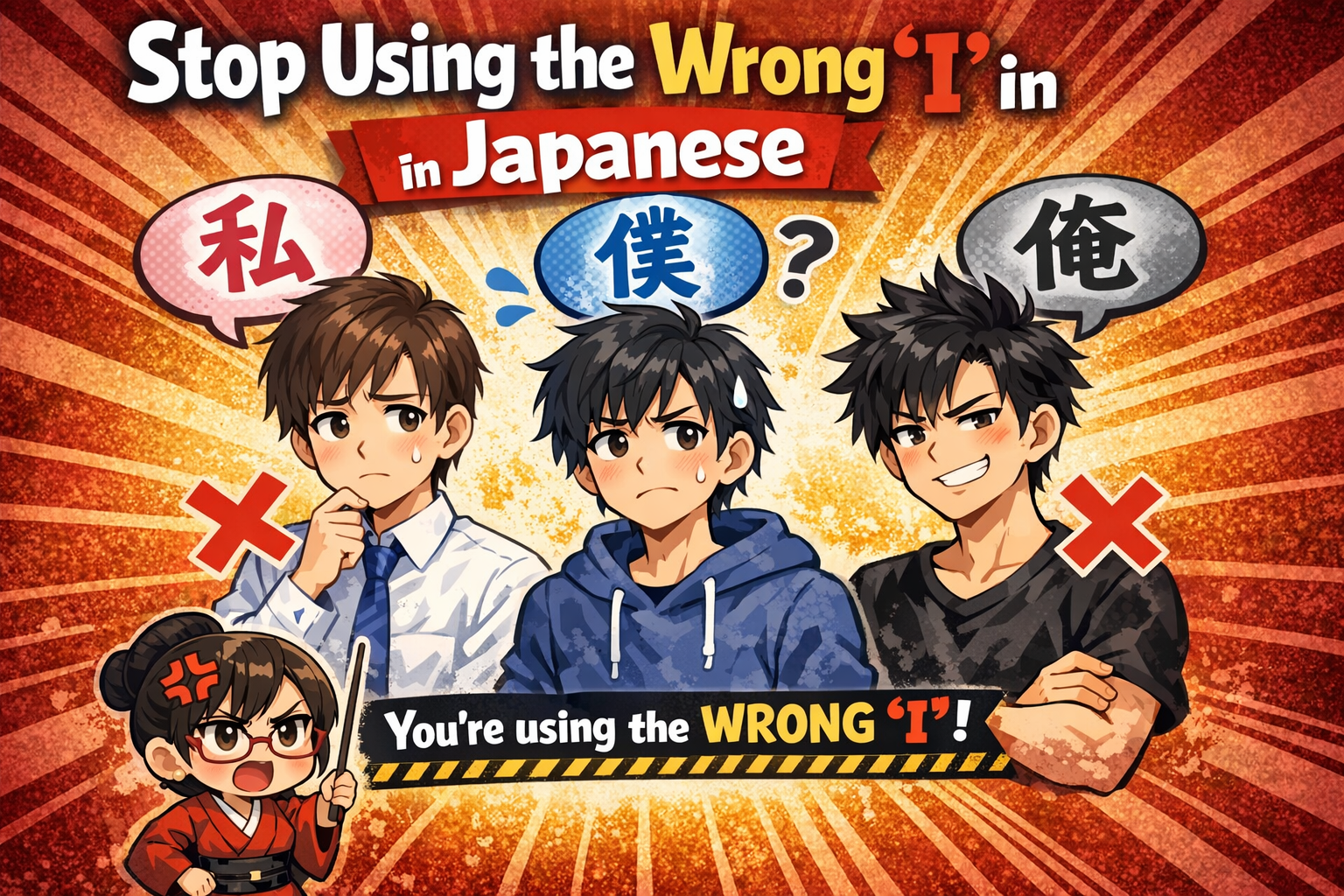
Japanese has multiple ways to say “I,” and choosing the wrong one can make you sound unnatural, awkward, or even rude. To sound natural, you must match your first-person pronoun to the situation, tone, and relationship.
In this article, we focus on MEN.
A Common Problem Learners Don’t Notice
When I speak with foreigners in Japan, I often notice that they refer to themselves in ways that feel slightly unnatural.
For example, using “watashi (私)” in casual situations or “ore (俺)” in formal situations.
Japanese has many different ways to say “I,” so it is important to choose the right one depending on context.
You can check the other article about “Watashi” below!

Can You Explain the Difference?
Consider these sentences:
- Watashi wa ikimasu.(私は行きます。)
- Boku wa ikimasu.(僕は行きます。)
- Ore wa iku.(俺は行く。)
All of them mean “I will go.”
But they do not sound the same at all.
The difference is not grammar.
It is nuance, personality, and situation.
The Three Core “I” Pronouns You Must Master
1. Watashi (私) — Neutral and Polite
Watashi is the safest and most neutral option.
Used in:
- business situations
- formal conversations
- speaking with strangers
Example:
- Watashi wa Nakamura desu.(私は中村です。)
“I am Nakamura.”
However, in casual conversation, using “watashi” too often can sound stiff or distant.
2. Boku (僕) — Casual and Soft (Mostly Male)
Boku is commonly used by men in relaxed situations. It gives a softer and more friendly impression than “ore.”
Used in:
- conversations with friends
- everyday situations
- when you want to sound gentle
Example:
- Boku wa iku yo.(僕は行くよ。)
“I’ll go.”
Using “boku” in very formal situations can sound slightly immature or less professional.
3. Ore (俺) — Very Casual and Strong (Male)
Ore is informal and often used among close friends. It can sound confident, rough, or masculine.
Used in:
- close friendships
- casual settings
Example:
- Ore iku wa.(俺行くわ。)
“I’m going.”
Using “ore” in formal situations is a clear mistake and may sound rude.
Real-Life Conversation Comparison
Situation: Talking to your boss
Natural:
- Watashi wa ashita ikimasu.(私は明日行きます。)
Unnatural:
- Ore wa ashita iku.(俺は明日行く。)
This sounds inappropriate and disrespectful.
Situation: Talking to close friends
Natural:
- Ore mo iku.(俺も行く。)
- Boku mo iku.(僕も行く。)
Less natural:
- Watashi mo ikimasu.(私も行きます。)
This sounds too formal and distant.
Why This Matters More Than You Think
In English, “I” is always just “I.”
In Japanese, your choice of “I” reflects:
- your personality
- your relationship with the listener
- the level of formality
Using the wrong one can give the wrong impression instantly.
Advanced Insight: It’s Not Just About Words
Japanese is not just about vocabulary. It is about social awareness.
That’s why:
- the same sentence changes tone depending on the pronoun
- native speakers switch pronouns naturally
In fact, many sentences don’t use “I” at all:
- Ashita iku.(明日行く。)
“I’ll go.”
This is often the most natural option.
Common Mistakes to Avoid
- Using “ore” with strangers or in business
- Using “watashi” in every casual conversation
- Thinking all pronouns are interchangeable
- Translating directly from English
Key Takeaways
Japanese has multiple ways to say “I,” and each carries a different nuance.
You must choose based on situation, relationship, and tone.
Using the wrong pronoun can make your Japanese sound unnatural or inappropriate.
Sometimes, the most natural choice is to omit “I” entirely.



コメント