Conclusion
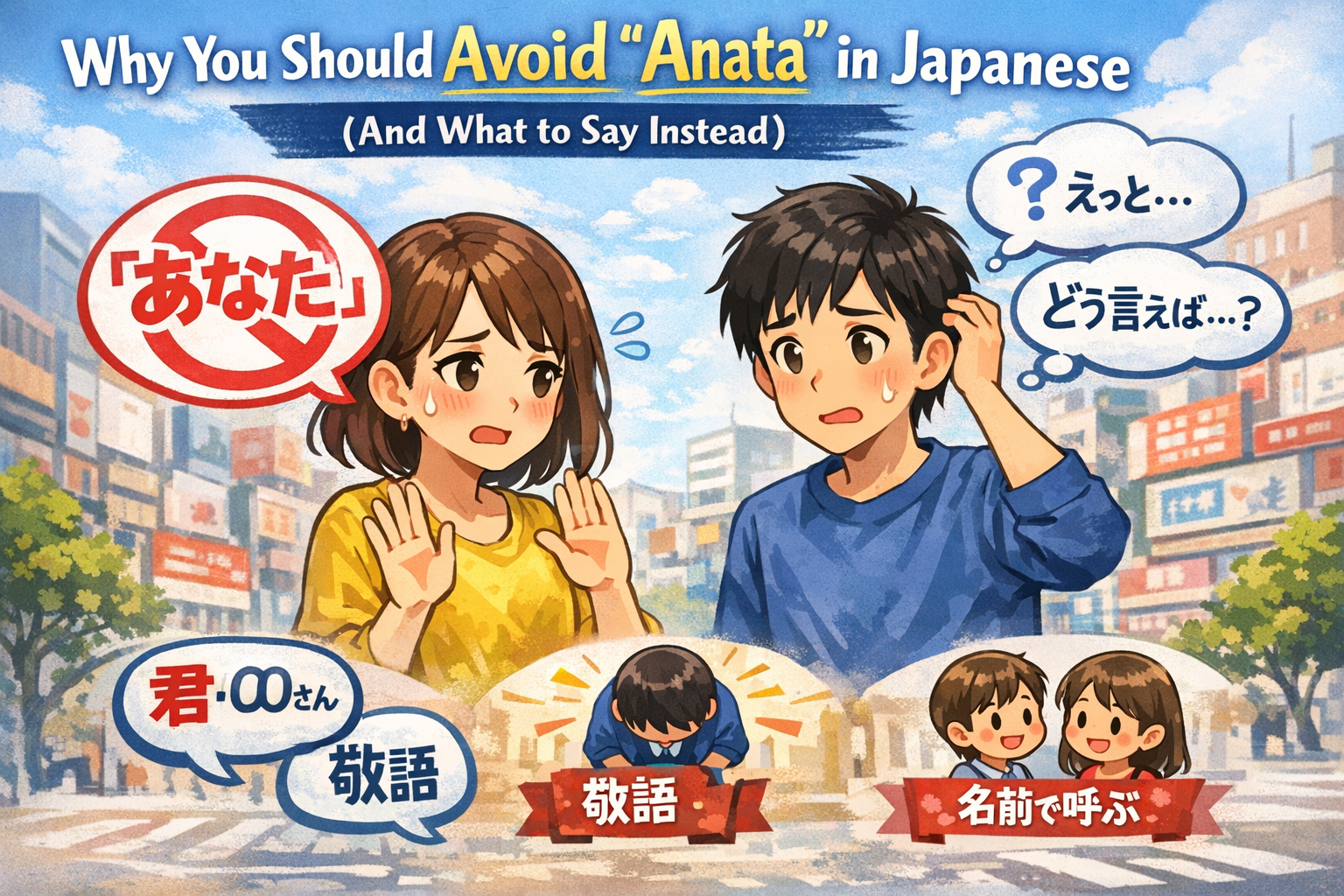
Avoid using “anata (あなた)” in everyday Japanese conversation. While it means “you,” it often sounds stiff, distant, or unnatural to native speakers. In real situations, Japanese people usually address others by name with a suffix or omit “you” entirely.
Why “Anata (あなた)” Feels Unnatural
Using “anata” in daily conversation can feel a bit unnatural to native speakers. This is because while “anata” is often seen in written language, it sounds too stiff or formal when used in spoken conversation.
In English, “you” is used constantly. In Japanese, directly saying “you” is often avoided. Because of this difference, learners who rely on “anata” can sound overly formal or slightly unnatural.
The Key Idea: Japanese Often Omits “You”
Japanese is a context-driven language. The subject is frequently omitted when it is obvious.
For example:
- Nani shiteru? (何してる?)
This naturally means “What are you doing?” even though “you” is not explicitly stated.
This omission is one of the most important habits to understand if you want to sound natural in Japanese.
What to Use Instead of “Anata”
When addressing someone, native speakers use several alternatives depending on the relationship and situation.
Name + San (さん)
The most common and safest option.
- Tanaka-san (田中さん)
- Yuki-san (ユキさん)
Example:
- Tanaka-san, kore mite kudasai.
(田中さん、これ見てください。)
“Tanaka, please look at this.”
Name + Kun (くん)
Often used for younger males or subordinates.
- Taro-kun (太郎くん)
Example:
- Taro-kun, ashita hima?
(太郎くん、明日暇?)
“Are you free tomorrow, Taro?”

This can be a bit rude when you use it to superior.
Name + Chan (ちゃん)
Used for close relationships, children, or in a friendly tone.
- Miki-chan (ミキちゃん)
Example:
- Miki-chan, genki?
(ミキちゃん、元気?)
“How are you, Miki?”
This is friendly one.
But if you use it to people who aren’t close with you,
it sounds strange and rude.
Kimi (君)
A casual way to say “you,” often used by men. It can sound direct depending on tone.
Example:
- Kimi wa dou omou?
(君はどう思う?)
“What do you think?”
Omae (お前)
A very rough and informal way to say “you.” It can sound rude if used incorrectly.
Example:
- Omae nani shiteru?
(お前何してる?)
“What are you doing?”
Real Conversation Examples
Unnatural:
- Anata wa nani o shiteimasu ka?
(あなたは何をしていますか?)
This is grammatically correct but sounds like a textbook sentence.
Natural:
- Nani shiteru?
(何してる?)
More natural with a name:
- Yuki-san, nani shiteru no?
(ユキさん、何してるの?)
When “Anata” Is Actually Used
There are limited situations where “anata” sounds natural.
One example is when a wife addresses her husband:
- Anata, gohan dekita yo.
(あなた、ご飯できたよ。)
“Dinner is ready.”
Even in situations where you don’t know someone’s name, Japanese speakers often avoid “anata” and instead say:
- Sumimasen (すみません)
“Excuse me”
Wanna know usages of “Sumimasen”?↓

Key Takeaways
“Anata” is not wrong, but it is rarely used in natural conversation.
Using names with suffixes or omitting the subject is much more common.
If you rely too much on “anata,” your Japanese may sound unnatural.
If you want to know more conversational Japanese, check below!





コメント