If you’re traveling to Japan, you might be wondering:
Can people speak English?
Here’s the honest answer first:
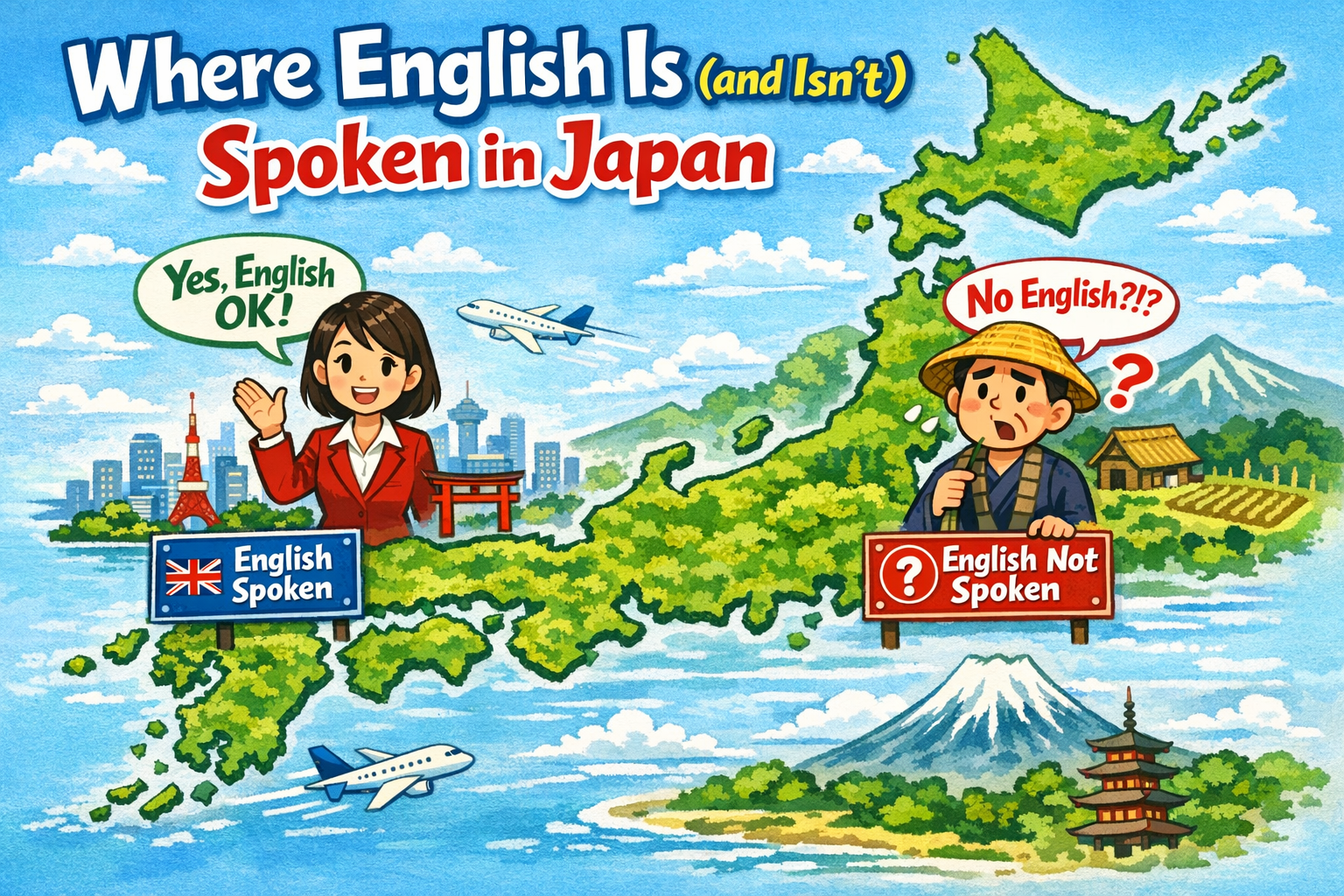
In major cities like Tokyo, Osaka, and Kyoto, you can often get by with English — especially in hotels, major stations, and tourist areas. However, in local areas and everyday situations, English is much less common.
As a Japanese person, I can tell you this clearly:
Many Japanese people understand some English, but are not confident speaking it.
Where English Is Commonly Spoken
In tourist areas like Osaka, Kyoto, and Tokyo, there are many foreign visitors. Because of this, you’ll find plenty of:
- Restaurants
- Souvenir shops
- Izakayas
Many of these places can communicate in English.
Japanese perspective:
Staff in these areas are used to interacting with tourists, so even if their English isn’t perfect, they will do their best to help you.
If you plan to eat out, check out these essential Japanese phrases for ordering food in Japan.

Where English Is NOT Common
However, the situation changes outside of those environments.
It’s best to assume that most ordinary people you pass on the street do not speak English fluently.
For example:
- Random people on the street
- Small local shops
- Residential areas
Japanese perspective:
Even if someone understands you, they may hesitate to respond in English because they are not confident.
Helpful Things When Talking to Japanese People
When you need to ask someone for help, having these things will make communication much easier:
- Google Translate
- A map (on your phone or paper)
- A smile 🙂
Especially a smile — it makes a big difference in Japan.
What Actually Happens in Real Life
Here’s what I often see as a Japanese person:
Travelers speak English
Japanese people understand a little
Communication becomes a mix of:
- Simple English
- Basic Japanese
- Gestures
And surprisingly — it works.
Asking for Directions
You:
Excuse me… where is Kyoto Station?
Japanese person:
Kyoto Station?
You:
Yes
Japanese person:
Go straight, then turn right
(Massugu itte, migi desu / まっすぐ行って、右です)
You:
Thank you!
(Arigatou gozaimasu / ありがとうございます)
When English Is Limited
You:
Do you speak English?
Japanese person:
A little…
(Eigo chotto… / 英語ちょっと…)
In Japan, “a little” often actually means
“I’m not confident speaking English.”
Using Google Translate
You:
(Showing your phone)
Excuse me, where is this place?
(Sumimasen, koko wa doko desu ka / すみません、ここはどこですか)
Japanese person:
Oh, I see. It’s over there
(Aa, asoko desu / ああ、あそこです)
Simple Restaurant Interaction
You:
Excuse me
(Sumimasen / すみません)
Staff:
Yes
You:
This one, please
(Kore onegaishimasu / これお願いします)
Even without English, this works perfectly in Japan
Japanese Perspective
As a Japanese person, I can tell you:
Even if English doesn’t work perfectly,
communication usually works with simple English, basic Japanese, and gestures.
Most Japanese people want to help — they’re just not confident speaking English.
Common Mistakes Travelers Make
- Expecting fluent English everywhere
- Speaking too fast or too complex
- Not trying any Japanese at all
Even a small effort (like saying sumimasen) can completely change how people respond to you.
Conclusion
Yes, you can use English in Japan — but only in certain places.
✔ Tourist areas → English often works
✔ Everyday situations → Japanese is needed
The best strategy? Use both.
Pro Tip:
Bring simple tools like Google Translate, a map, and a smile — they will help you more than you expect.
If you’re worried about communication, learning a few basic Japanese phrases for daily situations will make your trip much easier.




コメント