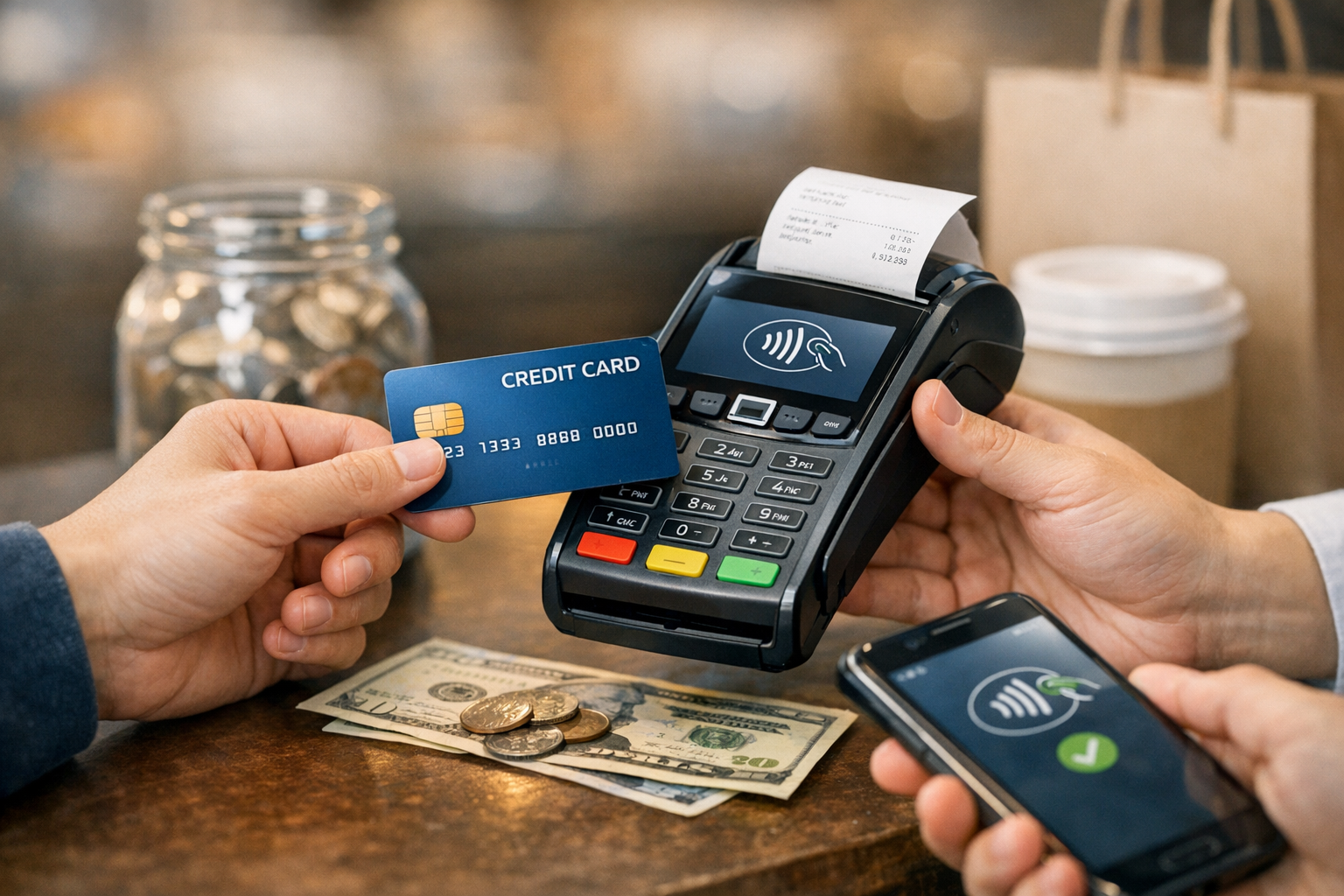
If you’re traveling to Japan, you might be wondering:
Should I use cash or a credit card?
Here’s the simple answer first:
In major cities like Tokyo, Osaka, and Kyoto, you can use both cash and credit cards in most places. However, in rural areas or traditional, long-established shops, cash may still be the only option.
As a Japanese person, I can tell you that Japan is becoming more cashless, but it’s not completely there yet. Knowing when to use each payment method will save you time and avoid awkward situations.
You can see real Japanese conversation during payment at the end of this article!
Where You Can Use Credit Cards
In big cities, card payments are widely accepted.
You can usually use your credit card at:
- Hotels
- Restaurants (especially chains)
- Convenience stores
- Department stores
- Train stations

In places like Tokyo, it’s now very common to pay by card. Many travelers are surprised by how easy it is.
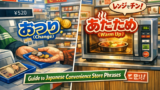
You wanna know how to use Japanese phrases at convenience stores and restaurant?
Where You Still Need Cash
Even today, cash is still important in Japan.
You may need cash at:
- Small local restaurants
- Street food stalls
- Rural areas
- Traditional shops
- Some temples and shrines
Especially in traditional, long-established shops in the countryside, cash-only is still very common.
Real tip:
If a place looks old or family-run, it’s safer to assume they only accept cash.
Cashless Payments Beyond Credit Cards
Japan also has mobile payment options.
The most popular one is PayPay.
PayPay (ペイペイ) is widely used in Japan, and its popularity has grown rapidly in recent years.
Many Japanese people even use it to send money to friends, which shows how common it has become.
While PayPay is extremely popular among locals, it may be harder for short-term travelers to set up. So credit cards and cash are still your best options.
IC Cards (Bonus Tip)
Although not exactly “cash vs card,” IC cards like Suica or PASMO are very useful.
You can use them for:
- Trains and buses
- Convenience stores
- Vending machines
They act like prepaid cards and make small payments very easy.
Common Mistakes Travelers Make
- Assuming everywhere accepts cards
- Not carrying enough cash
- Relying only on mobile payments
Japan is modern, but still partly cash-based
Real Payment Conversations in Japan
Here’s what real payment situations sound like in Japan:
At a Restaurant (Card or Cash?)
Staff:
Genkin desu ka? Kaado desu ka?
(現金ですか?カードですか?)
→ Cash or card?
You:
Kaado de onegaishimasu.
(カードでお願いします)
→ Card, please
Cash-Only Situation
Staff:
Sumimasen, genkin nomi desu.
(すみません、現金のみです)
→ Sorry, cash only
You:
Wakarimashita.
(わかりました)
→ Got it / Okay
Convenience Store Payment
Staff:
Oshiharai wa dou nasaimasu ka?
(お支払いはどうなさいますか?)
→ How would you like to pay?
You:
Genkin de onegaishimasu.
→ Cash, please
OR
Kaado de onegaishimasu.
→ Card, please
Receiving Change
Staff:
Otsuri desu.
(お釣りです)
→ Here’s your change
You:
Arigatou gozaimasu.
→ Thank you
Japanese Perspective
As a Japanese person, I can tell you:
These conversations are very short and predictable
Even if you only say:
- Kaado de onegaishimasu
- Genkin de onegaishimasu
That’s completely enough
Conclusion
You don’t need to choose between cash or card — you need both.
✔ Use cards in cities
✔ Carry cash for small or traditional places
In cities like Tokyo, Osaka, and Kyoto, both cash and cards are widely accepted. But in rural or traditional shops, cash may still be required.
Pro Tip:
Always carry some cash (around ¥10,000–¥20,000) just in case.
コメント